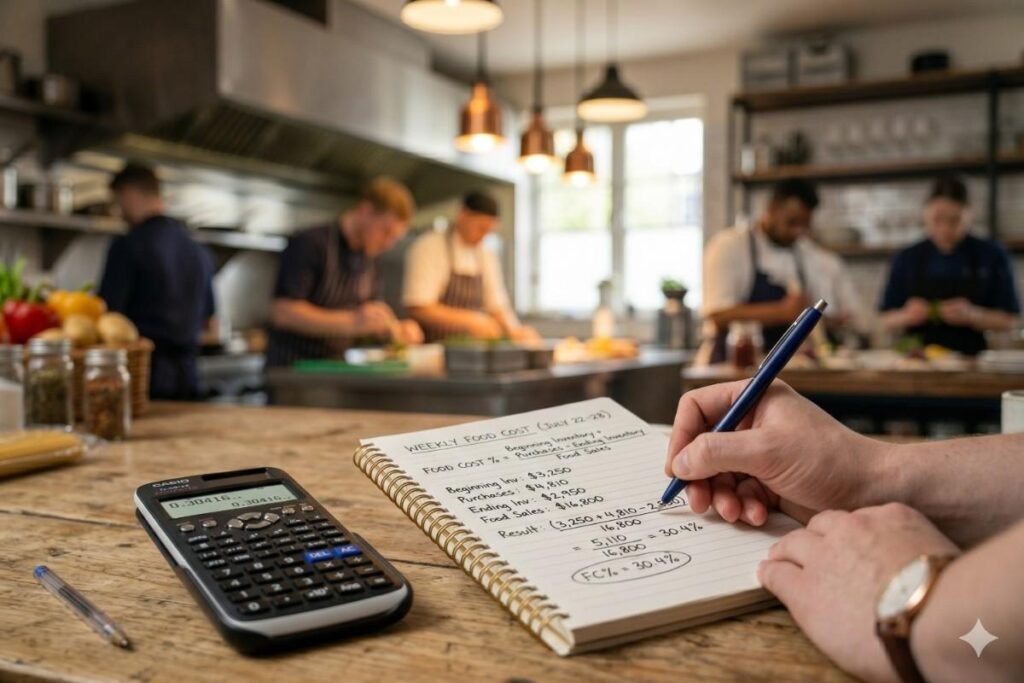
If you are working in a hotel, restaurant, café, or planning to start your own food business, understanding the Food Costing Calculation Guide is one skill you simply cannot ignore.
I will explain this in a very practical way—just like we handle things in real hotel operations—so even if you are new to finance, you will clearly understand how to calculate food cost and control profit.
This guide is not theory. This is what actually works in real F&B operations.
What is Food Costing Calculation Guide in Simple Words
The Food Costing Calculation Guide is a method used to find out how much it costs to prepare one dish and how much you should sell it for to make profit.
If you don’t calculate food cost:
- You may underprice your menu → loss
- You may overprice → lose customers
- You cannot control wastage
- You cannot track profit
👉 In simple terms: No costing = No control
Basic Terms in Food Costing Calculation Guide
Before we go deeper, understand these simple terms:
Food Cost
Total cost of ingredients used in one dish.
Selling Price
Price at which you sell the dish to the customer.
Food Cost Percentage
This shows how much percentage of your selling price is used in food cost.
👉 Formula:
Food Cost % = (Food Cost ÷ Selling Price) × 100
Step-by-Step Food Costing Calculation Guide (Easy Method)
Let’s break it down in the simplest way.
Step 1: Write All Ingredients
List everything used in the dish.
Example:
- Chicken
- Pasta
- Oil
- Cream
- Garlic
- Cheese
- Spices
👉 Do not ignore small items like salt or garnish.
Step 2: Check Purchase Cost
Find actual buying price.
Example:
- Chicken = $6 per kg
- Cream = $5 per liter
👉 Always use latest store price.
Step 3: Convert to Unit Cost
Convert into usable units.
Example:
- Chicken = $0.006 per gram
- Cream = $0.005 per ml
Step 4: Calculate Quantity Used
Example:
- Chicken = 200g
- Cream = 50ml
Step 5: Calculate Ingredient Cost
Multiply quantity with unit cost.
Example:
- Chicken → 200g × 0.006 = $1.20
Step 6: Total Food Cost
Add all ingredients.
👉 Example Total = $2.20
Food Costing Calculation Guide Formula Explained
Now apply formula:
👉 Food Cost % = (Food Cost ÷ Selling Price) × 100
Example:
- Cost = $2.20
- Selling Price = $12
👉 Food Cost % = 18.33%
Ideal Food Cost Percentage (Industry Standards)
Typical targets:
- Fast Food → 25% to 30%
- Café → 25% to 30%
- Casual Dining → 28% to 35%
- Fine Dining → 30% to 40%
- Banquets → 30% to 35%
👉 In banquets, control is very important due to volume.
How to Set Selling Price Using Food Costing Calculation Guide
Use this simple formula:
👉 Selling Price = Food Cost ÷ Target %
Example:
- Cost = $2.20
- Target = 30%
👉 Selling Price = $7.33
In real operations, we adjust → $10 or $12
Real Hotel Approach (Practical Understanding)
Hotels don’t calculate only ingredient cost.
They also consider:
- Staff salary
- Electricity
- Rent
- Wastage
- Breakage
👉 That’s why menu prices are always higher.
Common Mistakes in Food Costing Calculation Guide
Avoid these:
❌ Ignoring small ingredients
❌ Using outdated prices
❌ No portion control
❌ Not considering wastage
❌ No standard recipe
Why Standard Recipe is Important
Standard recipe ensures:
- Same taste
- Same portion
- Same cost
👉 Without it, food costing will never be accurate.
Food Cost Control Tips (From Real Operations)
1. Update Prices Regularly
Market prices change frequently.
2. Control Portions
Use measuring tools.
3. Reduce Wastage
Follow FIFO method.
4. Focus on High Profit Items
Promote items with better margins.
5. Use Yield Calculation
Example:
1 kg chicken → 800g usable
Food Costing Calculation Guide for Banquets
For banquets:
- Cost per plate × number of guests
- Manage production carefully
👉 Overproduction = loss
👉 Underproduction = bad guest experience
Advanced Concepts for Career Growth
If you want to grow in F&B:
Contribution Margin
Selling Price – Food Cost
Menu Engineering
- Star → High profit & demand
- Puzzle → High profit, low demand
- Plowhorse → Low profit, high demand
- Dog → Low profit, low demand
Simple Example for Beginners
Tea example:
- Milk = ₹20
- Tea powder = ₹5
- Sugar = ₹3
👉 Total = ₹28
Selling price = ₹100
👉 Food Cost % = 28%
Why Food Costing Calculation Guide is Important
It helps you:
- Control cost
- Increase profit
- Make better business decisions
Conclusion
The Food Costing Calculation Guide is one of the most powerful skills in the food and beverage industry.
If you learn this properly, you can:
- Improve profit
- Control waste
- Grow your career
👉 Start practicing daily with real dishes.
Author Note: This guide is written from practical hotel Food & Beverage operations experience to help beginners understand food costing, menu pricing, and restaurant profit control in simple language.